Clinically Relevant Genetic Insights in Hypothalamo-Pituitary Diseases is an international 2.5-day training course taking place from 15–17 October 2026 in Amsterdam, The Netherlands. Designed for both paediatric and adult endocrinologists, the course will explore the rapidly evolving role of genetics in the diagnosis and management of hypothalamo-pituitary diseases.
Through highly interactive small-group learning, participants will engage in case-based discussions, workshops, debates, and participant case presentations led by internationally renowned experts. The programme focuses on the practical application of genetic testing in clinical care, including interpretation of gene panels and variants, integration of genetics into routine endocrine [...]
Continue reading →
Save the date and register now for the next MTG5 webinar on ROHHAD syndrome – endocrine challenges in diagnosis and management scheduled for Monday, 5 October 14:00-15:00 CEST.
ROHHAD syndrome (Rapid-onset Obesity with Hypothalamic dysfunction, Hypoventilation, and Autonomic Dysregulation) is an extremely rare, life-threatening disorder primarily affecting children. Starting in previously healthy children between ages 1.5 and 11, it causes rapid weight gain, severe breathing issues while sleeping or awake, and nervous system imbalances. This webinar will provide updates on this challenging condition and the current studies being conducted in the endocrine field across UK [...]
Continue reading →
Save the date and register now for the next MTG5 webinar An overview of genomic imprinting, mechanisms and phenotypical implications in endocrine conditions scheduled for Friday 18 September 12:00-13:00 CEST.
Thomas Eggermann, University of Aachen, Germany and Endo-ERN Genomic Testing WG chair and Claire Power, Cork University Hospital, Ireland.
Register now and if you are unable to attend live you will receive a recording after the event.
An application has been made to the UEMS EACCME® for CME/CPD accreditation of this event.
Continue reading →
Registration now open: EPNS Research Meeting 16-17 October 2026, Thessaloniki, Greece
Head to Thessaloniki for the unique European Paediatric Neurology Society (EPNS) Research Meeting 2026, featuring plenary lectures from leading experts and interactive sessions, including two break-out sessions with five parallel working groups covering Autoimmune & Infectious Diseases, Developmental Neurology & Neurogenetics, Epilepsy, Fetal & Neonatal Neurology, Leukodystrophies, Movement Disorders, Neurometabolic, and Neuromuscular disorders.
Registration is now open on first-come, first-served basis to paediatric neurology researchers at all career stages—from trainees and PhD students to senior experts—this meeting offers an excellent opportunity for [...]
Continue reading →
ERDERA invites the ERN community to an introductory webinar on The ERDERA Diagnostic Research Workstream – An Overview, taking place on Thursday, 28 May 2026, from 13:00 to 14:00 CEST.
Presented by Holm Graessner, this opening session will explain what the ERDERA Diagnostic Research Workstream does, how it is organised, and how clinicians, researchers and expert groups can contribute. The webinar will provide an overview of the workstream’s core activities, including data sharing, systematic diagnostic reanalysis, advanced diagnostic pipelines, and innovation in genomic and multi-omics technologies.
The session is particularly relevant for ERN healthcare professionals, geneticists, clinicians, JTC [...]
Continue reading →
Register now for the upcoming MTG4 webinar planned for Thursday, 18 June from 16:30-18:00 (CEST). The programme will feature the following experts:
Primary hyperparathyroidism
**Thomas Cuny, La Conception Univerity Hospital, Marseille, France** was a subsitute speaker and we thank him for stepping in.
MEN1 in paediatrics
Steven Waguespack, The University of Texas MD Anderson Cancer Center in Houston, USA
MEN1 NETs
Omair Shariq, The Mayo Clinic, USA
Chaired by MTG4 chairs Federic Castinetti and Antje Redlich there will be a chance to ask questions directly to the experts.
If you are unable to attend live register anyway [...]
Continue reading →
Save the date and for this MTG2 webinar planned for Wednesday, 16 September at 17:00 CEST.
The webinar will feature Prof. Aliya Khan, McMaster University, Canada and Prof. Maria-Luisa Brandi, University of Florence.
An application has been made to the UEMS EACCME® for CME/CPD accreditation of this event.
Continue reading →
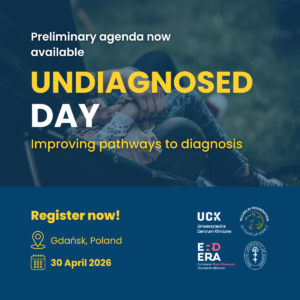
Undiagnosed Day 2026| Where diagnosis becomes hope: The power of collaboration and technology in rare diseases
Thursday, 30 April, 2026, University Clinical Centre (UCK), Gdansk, Poland
This in-person meeting will focus on practical approaches to phenotyping and diagnosis in undiagnosed conditions, including how to define next steps when a diagnosis remains uncertain, and how to strengthen pathways and collaboration around undiagnosed care.
Find out more at the ERDERA website including speakers, topics and registration information.
Continue reading →
The FIRENDO network will award a grant for the 2026-2027 period to fund a collaborative research project between a FIRENDO member institution and a healthcare provider (HCP) that is a member of the ENDO-ERN (European Reference Network for Rare Endocrine Conditions) outside of France.
The grant aims to stimulate international collaborative clinical, translational, or basic research projects between:
a FIRENDO member institution (clinical or research laboratory, clinical department, patient association) – directory available here,
and an institution accredited as an Endo-ERN (European Reference Network for Rare Endocrine Diseases) HCP outside of France – Continue reading →
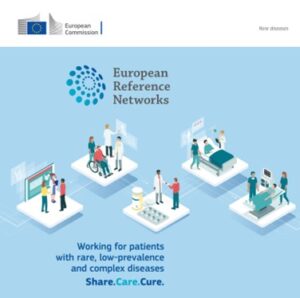
An updated brochure presenting the European Reference Networks (ERNs) is now available.
ERNs are 24 thematic networks connecting specialised healthcare centres across Europe to improve the diagnosis, care and treatment of people living with rare, low-prevalence and complex diseases. By bringing together medical expertise, research and patient perspectives, ERNs help ensure that knowledge travels — not patients.
The brochure provides an overview of how ERNs work, the role they play in improving care across borders, and highlights each of the 24 networks, including Endo-ERN, which focuses on rare endocrine conditions.
Through collaboration, [...]
Continue reading →